
PCR Explained: Principles, Steps & Troubleshooting Guide (2025-26)
H2: What Is PCR? (Simple Explanation + Scientific Definition)
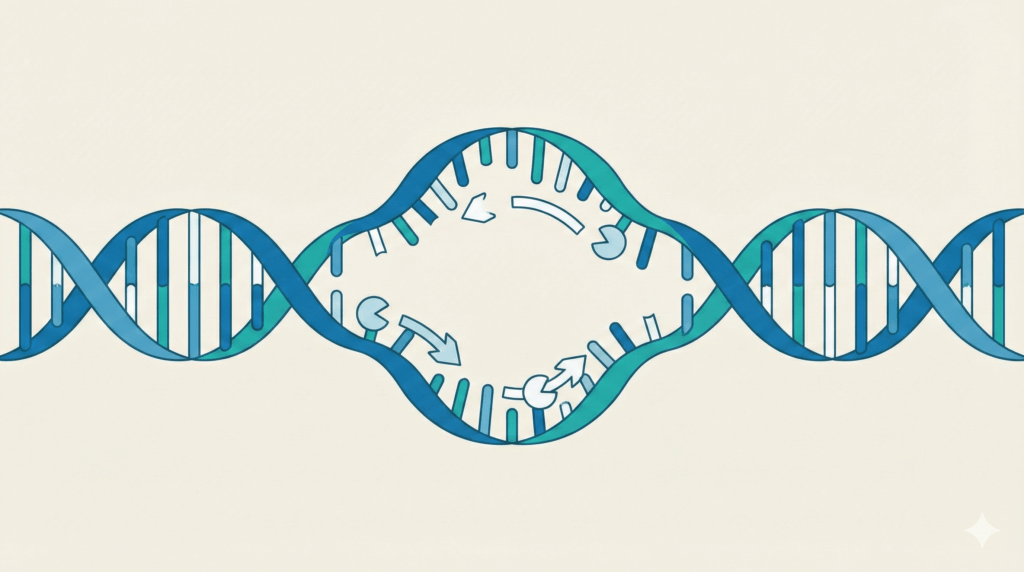
Polymerase Chain Reaction (PCR) is widely considered the “workhorse” of modern molecular biology. In simple terms, you can think of PCR as a molecular photocopy machine. Just as a photocopier takes a single document and churns out thousands of identical duplicates, PCR takes a specific segment of DNA and amplifies it into millions or billions of copies in a matter of hours.
Scientifically, PCR is an in vitro enzymatic method used to amplify a specific DNA sequence (the target) from a complex mixture of DNA (the template). This technique relies on thermal cycling, repeated heating and cooling of the reaction mixture to facilitate DNA melting and enzymatic replication of the DNA.
The Revolution in Molecular Biology
Before the invention of PCR, amplifying DNA was a laborious process that involved cloning DNA fragments into bacteria and waiting days or weeks for them to replicate. This changed forever in 1983 when Kary Mullis, an American biochemist, conceived the idea of PCR while driving along the Pacific Coast Highway. Mullis realised that by using two opposing primers and a DNA polymerase, he could exponentially amplify a target sequence.
For this groundbreaking invention, Mullis was awarded the Nobel Prize in Chemistry in 1993. Today, PCR is indispensable. It is the foundation of the $16+ billion global PCR technology market (2024), projected to reach over $38 billion by 2035 [1].
Real-World Examples:
- Medical Diagnostics: During the COVID-19 pandemic, RT-PCR (Reverse Transcription PCR) became a household term as the gold standard for detecting SARS-CoV-2.
- Forensics: PCR allows forensic scientists to generate a DNA profile from minute biological samples (like a drop of blood or a single hair follicle) found at crime scenes.
H2: Principle of PCR
The principle of PCR is based on the natural process of DNA replication that occurs in living cells, but it is controlled in a test tube (Eppendorf tube). The process relies on three key physical and biochemical concepts:
- Thermal Denaturation: DNA is a double helix held together by hydrogen bonds between complementary base pairs (A-T and G-C). Heating the DNA disrupts these bonds, separating the double-stranded DNA (dsDNA) into two single strands (ssDNA).
- Primer Annealing: Short, synthetic DNA strands called “primers” are designed to be complementary to the flanking regions of the target sequence. At lower temperatures, these primers bind (anneal) to their specific targets on the single-stranded template.
- Enzymatic Extension: A thermostable DNA polymerase enzyme binds to the primer-template hybrid and synthesises a new DNA strand complementary to the template by adding free nucleotides (dNTPs).
The “Chain Reaction”
The genius of PCR lies in the “chain reaction.” The product of one cycle serves as the template for the next.
- Cycle 1: 1 copy, –> 2 copies
- Cycle 2: 2 copies, –> 4 copies
- Cycle 3: 4 copies, –> 8 copies
- Cycle 30: ~1 billion copies (230})
This exponential growth allows researchers to start with a negligible amount of DNA (picograms) and end up with micrograms of product, sufficient for sequencing, cloning, or visualisation on a gel.
H2: PCR Components
A successful PCR reaction requires a precise “master mix” of chemical components. Missing just one or getting the concentration wrong can lead to reaction failure.
1. Template DNA
This is the sample DNA containing the target sequence you want to amplify. It can be genomic DNA (gDNA), complementary DNA (cDNA), or plasmid DNA.
- Research Note: High purity is essential. Contaminants like phenol, EDTA, or proteinase K can inhibit the polymerase.
2. Primers (Forward and Reverse)
Primers are short single-stranded DNA oligonucleotides (usually 18 to 25 base pairs) that define the start and end of the region to be amplified.
- Forward Primer: Binds to the anti-sense strand.
- Reverse Primer: Binds to the sense strand.
- Critical Factor: Primer design is the most critical step in PCR setup. Poorly designed primers can lead to “primer dimers” (where primers bind to each other) or non-specific amplification.
3. DNA Polymerase (Taq Polymerase)
The enzyme responsible for synthesising new DNA strands. The most common is Taq polymerase, isolated from the thermophilic bacterium Thermus aquaticus, which lives in hot springs.
- Why Taq? Unlike normal human DNA polymerase, which denatures (breaks down) at high temperatures, Taq is stable at 95°C. It functions optimally at 75 to 80°C and can extend DNA at a rate of ~150 nucleotides per second [2].
4. dNTPs (Deoxynucleotide Triphosphates)
These are the building blocks of DNA: dATP, dGTP, dCTP, and dTTP. The polymerase grabs these floating nucleotides and adds them to the growing DNA chain.
- Standard Concentration: Usually 200 µM each.
5. Reaction Buffer
Provides the optimal chemical environment (pH and ionic strength) for the polymerase. It usually contains Potassium Chloride (KCl) and Tris-HCl (pH 8.3 to 8.8).
6. Magnesium Chloride (MgCl2)
Magnesium is a critical cofactor for DNA polymerase activity. It also helps stabilise the primer-template interaction.
- Optimisation: The typical concentration range is 1.5 mM to 4.0 mM. Too little Mg2+ results in no product; too much leads to non-specific binding and spurious bands [3].
7. Optional Additives
- DMSO (Dimethyl Sulfoxide): Used for
GC-rich templates to help disrupt secondary structures. - BSA (Bovine Serum Albumin): Prevents the polymerase from sticking to the tube walls and stabilises the enzyme.
Need hands-on experience? Learn how to mix these components correctly in our Wet Lab Fundamentals Workshop.
Source: Getty Images
H2: Step-by-Step PCR Cycle
A standard PCR run involves 25 to 35 cycles of three distinct temperature steps. Before the cycles begin, there is usually an Initial Denaturation step (94 to 95°C for 2 to 5 minutes) to ensure the genomic DNA is fully single-stranded.
Diagram of a PCR Cycle
       STEP 1: DENATURATION (94-98°C)
       -----------------------------
       Double Stranded DNA splits
       5'-------------------------3'
       3'-------------------------5'
                  |
                  v
       5'-------------------------3'  (Single Strands)
       3'-------------------------5'

                  |
       STEP 2: ANNEALING (50-65°C)
       --------------------------
       Primers bind to template
       5'-------------------------3'
             <---- (Reverse Primer)

       (Forward Primer) ---->
       3'-------------------------5'

                  |
       STEP 3: EXTENSION (72°C)
       ------------------------
       Taq Polymerase synthesizes new DNA
       5'=========================3'
       3'=========================5'
       (Two Double Stranded Molecules Created)
1. Denaturation (94°C, 98°C)
Duration: 20 to 30 seconds.
The high temperature breaks the hydrogen bonds between the DNA strands.
- Note: If the template is
GC-rich (G and Chave 3 hydrogen bonds vs. 2 forA and T), a higher temperature or longer time may be needed.
2. Annealing (50°C, 65°C)
Duration: 20 to 40 seconds.
The temperature is lowered to allow primers to bind to the template.
- The Sweet Spot: The annealing temperature (Ta) is usually set 3 to 5°C below the melting temperature (Tm) of the primers.
- If Ta is too low: Primers bind non-specifically (messy results).
- If Ta is too high: Primers fail to bind (no product).
3. Extension (72°C)
Duration: 30 seconds, 2 minutes (approx. 1 min per 1kb of target length).
The temperature is raised to 72°C, the optimal activity temperature for Taq polymerase. The enzyme synthesises the complementary strand.
- Final Extension: After the last cycle, a final hold at 72°C for 5 to 10 minutes ensures all incomplete strands are fully extended.
H2: Types of PCR (Quick Overview)
While the core principle remains the same, several PCR variants exist for specific research needs.
- Conventional PCR: The standard qualitative method described above. The product is visualised on an agarose gel (End-point PCR).
- qPCR (Real-Time PCR): Uses fluorescent dyes (like SYBR Green or TaqMan) to measure DNA amplification as it happens. It is quantitative and used for gene expression analysis.
- RT-PCR (Reverse Transcription PCR): Starts with RNA instead of DNA. An enzyme called Reverse Transcriptase first converts RNA into cDNA, which is then amplified. Essential for studying RNA viruses (like HIV, SARS-CoV-2).
- Multiplex PCR: Uses multiple pairs of primers in a single tube to amplify several different targets simultaneously. Used in forensic DNA profiling and pathogen detection panels.
- Touchdown PCR: A modification where the annealing temperature is gradually lowered in early cycles. This increases specificity and reduces primer dimers.
Related Reading: Learn about extracting the DNA/RNA needed for these techniques in our DNA Extraction Guide.
H2: Common PCR Errors & Troubleshooting Guide
Even experienced researchers face PCR failures. “It worked yesterday, but not today” is a typical lab phrase. Here is a research-based troubleshooting guide.
Troubleshooting Table
| Problem | Possible Cause | Solution |
| No Bands (No Amplification) | Forgot to add polymerase or primers. | The template contains inhibitors (ethanol, salt). |
| Annealing temp (Ta) too high. | Lower Ta by 2 to 5°C or perform a gradient PCR. | |
| Primers bind to multiple sites. | Re-purify DNA or dilute the template 1:10. | |
| Faint Bands | Low template concentration. | Increase cycle number (up to 40) or template amount. |
| Old/Degraded dNTPs. | Use fresh aliquots of dNTPs; avoid repeated freeze-thaw. | |
| Non-Specific Bands (Extra Bands) | Annealing temp (Ta) too low. | Increase Ta. |
| Too much Mg2+. | Titrate MgCl2 downwards (e.g., from 3mM to 1.5mM). | |
| Primer concentration is too high. | Check primer specificity using NCBI Primer-BLAST. | |
| Primer Dimers (Fuzzy cloud at bottom) | Primer concentration too high. | Reduce primer concentration (usually 0.2 to 0.5 µM). |
| Primers are complementary to each other. | Redesign primers to avoid self-complementarity. | |
| Smearing (Streaks down the lane) | Template DNA degraded. | Reduce the cycle number. |
| Too much enzyme or template. | Reduce Taq or template amount. | |
| Too many cycles. | Check your checklist. Always keep the enzyme on ice. |
Downloadable Resource
Download our “PCR Troubleshooting Checklist PDF”, Print this and stick it on your lab freezer for quick reference!
H2: Applications of PCR in Research & Industry
1. Clinical Diagnostics
PCR allows for the rapid detection of pathogens that are difficult to culture, such as Mycobacterium tuberculosis or Chlamydia. It is also used to detect genetic mutations associated with diseases such as cystic fibrosis and sickle cell anaemia.
2. Gene Cloning
To study a specific gene, researchers use PCR to amplify the gene of interest, adding “sticky ends” (restriction sites) to the primers. This allows the gene to be inserted into a plasmid vector for expression in bacteria.
- Link: Master these skills in our Research Mentorship Program.
3. Forensic Science
Short Tandem Repeat (STR) analysis uses PCR to amplify highly variable regions of the human genome. Because these regions vary uniquely between individuals (except identical twins), they act as a genetic fingerprint.
4. Food & Environmental Testing
PCR is used to detect Genetically Modified Organisms (GMOs) in food or to identify fecal contamination (E. coli) in water supplies.
5. Paleogenetics
PCR has successfully amplified DNA from ancient mammoths and Neanderthals, allowing us to understand evolutionary history.
H2: PCR Viva Questions (Bonus Section)
Preparing for a lab exam or interview? Here are high-value questions you might be asked.
Q1: Why do we use Taq polymerase instead of human DNA polymerase?
A: Human polymerase denatures (destroys) at 95°C. Taq polymerase is thermostable (from Thermus aquaticus) and survives the high-temperature denaturation step, so we don’t need to add fresh enzyme after every cycle.
Q2: What is the function of MgCl2 in PCR?
A: Magnesium ions (MgCl2) act as a cofactor for the polymerase enzyme and help stabilise the primer-template annealing.
Q3: What are primer dimers?
A: They are artefacts caused when primers anneal to each other rather than the template. They appear as diffuse bands at the bottom of the gel (low molecular weight).
Q4: How do you calculate the Melting Temperature (Tm) of a primer?
A: A basic formula is Tm = 2(A + T) + 4(G + C)
Q5: What is the difference between PCR and qPCR?
A: PCR is qualitative (shows if DNA is present on a gel). qPCR is quantitative (measures how much DNA is present in real-time using fluorescence).
Q6: Why is the extension temperature usually 72°C?
A: 72°C is the optimal temperature for Taq polymerase activity, where it synthesises DNA most efficiently.
Q7: What is a “Hot Start” PCR?
A: It involves using a modified polymerase that is inactive at room temperature and only activates after the initial heating step (95°C). This prevents non-specific binding during reaction setup.
Q8: What happens if you add too much DNA template?
A: It can lead to non-specific amplification and smearing on the agarose gel.
Q9: Can PCR amplify RNA?
A: No, standard PCR only works on DNA. To amplify RNA, it must first be converted to cDNA using Reverse Transcriptase (RT-PCR).
Q10: What is the direction of DNA synthesis?
A: DNA is always synthesised in the 5′ to 3′ direction.
Summary
- Definition: PCR is an enzymatic technique to amplify specific DNA sequences exponentially.
- Key Steps: Denaturation (94°C), Annealing (50 to 65°C), Extension (72°C).
- Components: Template DNA, Primers, Taq Polymerase, dNTPs, Buffer, MgCl2.
- Importance: It revolutionised diagnostics, forensics, and genetics (Nobel Prize 1993).
- Troubleshooting: Optimising annealing temperature and MgCl2 concentration resolves most issues.
Frequently Asked Questions (FAQs)
Ready to Master Lab Skills?
Theory is essential, but nothing beats hands-on experience. If you want to perform PCR, run gels, and analyse results yourself, register for our Wet Lab Fundamentals Workshop.
For advanced training, check out our Cell Culture Techniques and Research Mentorship programs.
References
[1] Market Research Future. (2024). PCR Technology Market Size, Growth Report, Trends, 2035. Retrieved from marketresearchfuture.com
[2] Thermo Fisher Scientific. Taq DNA Polymerase User Guide. Retrieved from thermofisher.com
[3] Promega Corporation. (2024). PCR Optimization Kit Technical Manual. Retrieved from promega.com
[4] Mullis, K. et al. (1986). “Specific Enzymatic Amplification of DNA In Vitro: The Polymerase Chain Reaction”. Cold Spring Harbor Symposia on Quantitative Biology.
What is the golden rule of PCR primer design?
Primers should be 18 to 25 nucleotides long, have a GC content of 40 to 60%, and have a Tm within 5°C of each other. Avoid runs of identical nucleotides (e.g., AAAAA).
How long does a PCR reaction take?
A standard PCR run typically takes 1.5 to 3 hours, depending on the cycle number and the speed of the thermal cycler.
Can I leave my PCR product in the machine overnight?
Yes. Most thermal cyclers have an “infinite hold” step at 4°C at the end of the program to preserve the DNA until you retrieve it.
Why is my PCR negative control showing a band?
This indicates contamination. One of your reagents (water, buffer, or pipette tips) likely contains DNA. Discard reagents and start with fresh ones.
What is the maximum length of DNA Taq polymerase can amplify?
Standard Taq is reliable for fragments up to 3 to 4 kb. For longer targets (10 to 20 kb), you need specialised “Long-Range” polymerases.