What Is Molecular Docking? A Beginner’s Guide
Most drugs work by sticking to a specific protein in your body and switching it on or off. The hard part of drug discovery is finding a small molecule that fits its target protein closely enough to do that, out of the millions of possible candidates. Testing each one in the lab would take lifetimes, so researchers first ask the question on a computer: out of these molecules, which ones are likely to fit, and how tightly? That question is exactly what molecular docking answers.
This guide explains what molecular docking is, how it predicts the way a small molecule binds to a protein, why it has become central to modern drug discovery, and the practical steps a beginner can take to run a first docking experiment.
What Is Molecular Docking?
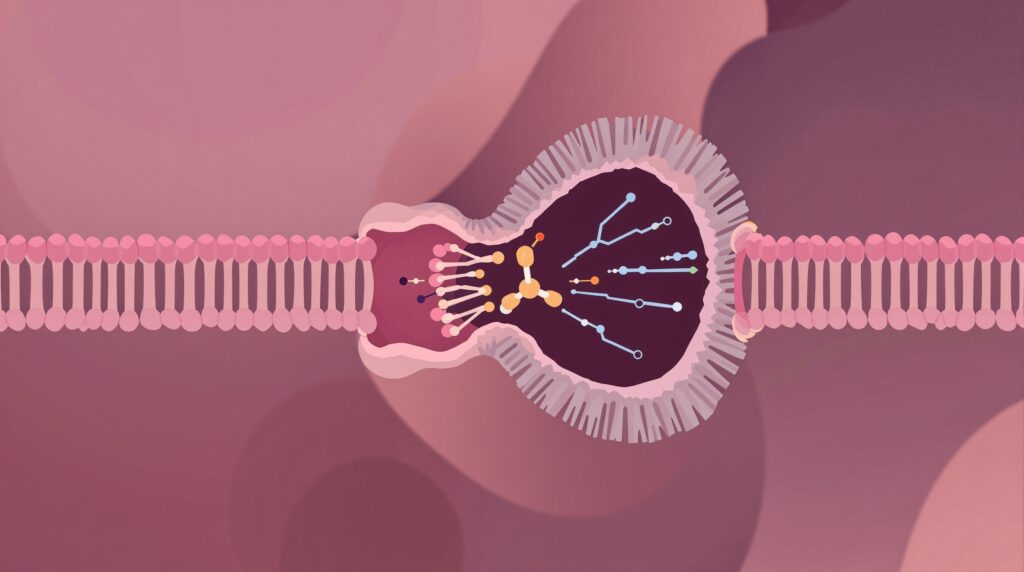
Molecular docking is a computational technique that predicts how a small molecule (called a ligand) fits into a target protein and estimates how strongly the two bind. It searches for the best position, orientation, and shape of the ligand inside a protein’s binding site, then scores each arrangement so the most promising candidates can be ranked and tested further.
The mental picture most people find useful is a lock and key. The protein’s binding pocket is the lock, the ligand is the key, and docking software tries thousands of ways of inserting and twisting the key to see which fits best. In reality both the lock and the key can flex slightly, which is why modern docking is closer to a hand fitting into a glove than a rigid metal key.
Docking sits within the broader field of molecular modeling and computational chemistry, and it is one of the most widely used tools in computer-aided drug design (CADD).
Why Molecular Docking Matters in Drug Discovery
Bringing a new drug to market can take more than a decade and cost over a billion dollars, and most of that money is spent on candidates that eventually fail. Anything that helps researchers focus on the molecules most likely to work, earlier, saves enormous time and resources. Docking is one of the cheapest ways to do that filtering.
- Virtual screening at scale. Instead of physically testing every compound, researchers dock huge libraries of millions of molecules against a target and keep only the top-scoring few hundred for lab work.
- Understanding the mechanism. Docking shows where and how a molecule binds, which helps chemists understand why a drug works and how it might be improved.
- Guiding chemical design. If a candidate binds well except for one clashing region, chemists can redesign that part of the molecule and re-dock it before ever synthesising it.
- Drug repurposing. Docking existing approved drugs against a new target can reveal whether an old medicine might treat a different disease.
This was a visible part of the response to recent global health challenges, where research teams docked vast compound libraries against viral proteins to nominate candidates for testing within weeks rather than months.
How Molecular Docking Works
Every docking program, regardless of brand, has to solve the same two problems: where could the ligand go, and how good is each possibility? These are handled by the search algorithm and the scoring function.
1. Preparing the structures
Docking needs a three-dimensional model of the protein, usually downloaded from the RCSB Protein Data Bank, the public archive of experimentally determined structures. The raw file is cleaned up: water molecules are often removed, hydrogen atoms are added, and charges are assigned. The ligand is prepared the same way so that both molecules carry the chemical detail the software needs.
2. Defining the search space
Next you tell the software where to look. In targeted docking you place a box around the known binding pocket, which is faster and more accurate. In blind docking you let the program search the whole surface when the binding site is unknown.
3. The search algorithm
The search algorithm generates many candidate arrangements of the ligand, called poses. Each pose has a position, an orientation, and a set of rotatable-bond angles that define the molecule’s shape. Because trying every combination is impossible, programs use smart strategies such as genetic algorithms or guided random sampling to explore the most promising poses efficiently.
4. The scoring function
For each pose, a scoring function estimates the binding strength, usually as an approximate binding energy. More negative scores generally indicate a tighter, more favourable fit. Scoring accounts for effects such as the shape complementarity between molecules, electrostatic attraction and repulsion, hydrogen bonds, and water-related (hydrophobic) effects. The poses are then ranked, and the top one is the program’s best guess for how the ligand binds.
5. Interpreting the results
The output is a ranked list of poses with scores and a 3D view of how the ligand sits in the pocket. A researcher inspects whether the predicted interactions make chemical sense before trusting the result.
The Limits You Should Know About
Docking is powerful but approximate, and treating its scores as exact truth is the most common beginner mistake. Scoring functions trade accuracy for speed, so the predicted ranking does not always match real-world binding strength. A few honest caveats:
- Scores are estimates, not measurements. Docking is good at separating likely binders from unlikely ones, but it is unreliable at finely ranking molecules that score close together.
- Proteins move. Most docking treats the protein as rigid or semi-flexible, yet real proteins shift shape when a ligand binds, which can change the answer.
- Water and environment are simplified. The crowded, watery inside of a cell is hard to model fully, so important effects can be missed.
This is why docking is a starting filter, not a final verdict. Promising poses are typically followed up with more rigorous methods such as molecular dynamics simulations and, ultimately, laboratory experiments.
Tools Beginners Actually Use
You can start docking with free, well-documented software and a normal laptop. The most common entry points are:
- AutoDock Vina. A fast, free, and widely cited docking engine that is the usual first tool for students. Its documentation and large user community make troubleshooting easier.
- AutoDockTools / MGLTools. A graphical helper for preparing proteins and ligands and setting up the search box for Vina.
- UCSF Chimera or PyMOL. Visualisation tools for inspecting structures and the interactions in your final pose.
- Open Babel. A converter for the many molecular file formats you will inevitably encounter.
A realistic first project is to download a protein with a known drug already bound, remove that drug, dock it back in, and check whether the software reproduces the experimentally observed pose. This “re-docking” exercise builds intuition and confidence before you tackle unknown molecules.
Where to Go From Here
Molecular docking is one of the most rewarding skills to learn in computational biology because it connects chemistry, biology, and programming around a question with real impact: which molecule could become a medicine. Once you are comfortable with single-ligand docking, natural next steps include virtual screening of larger libraries, flexible-receptor docking, and pairing docking with molecular dynamics for more reliable results.
If you want a guided path, structured training helps you avoid the common setup errors that frustrate self-taught beginners. StemSkills Lab’s Molecular Modeling and Drug Designing course walks through protein preparation, docking, and result analysis on real targets, and you can explore the full range of computational-science programs on the courses page.
Related Questions
Is molecular docking the same as molecular dynamics?
No. Docking quickly predicts a static best-fit pose and a binding score, while molecular dynamics simulates how the protein and ligand move over time. Docking is often used first to find a pose, and dynamics is used afterwards to test how stable that pose really is.
Do I need a powerful computer to run molecular docking?
For learning and single-molecule docking, an ordinary laptop is enough and tools like AutoDock Vina run in minutes. You only need serious computing power for large-scale virtual screening of millions of compounds.
What is a “good” docking score?
There is no universal cutoff, because scores depend on the software and target. More negative scores suggest stronger binding, but the meaningful comparison is relative: how a molecule scores against others docked into the same protein under the same settings, not its absolute number.
Can molecular docking discover a drug on its own?
No. Docking narrows millions of possibilities down to a manageable shortlist, but every promising candidate still has to be tested in the lab and refined through chemistry, biology, and clinical trials before it can become a real medicine.
Ready to learn this hands-on, not just read about it? Start free: How to learn molecular docking (step by step).